Profiles

Principal Investigators

Biography

Peter Wonka holds an M.Sc. in Computer Science (Dipl.-Ing.) in 1997, an M.Sc. in Urban Planning (Dipl.-Ing.) in 2002, and a Ph.D. in Computer Science (Dr. techn.) in 2001 from the Vienna University of Technology, Austria.

Before joining KAUST in 2011 as an Associate Professor of Computer Science, he worked as a postdoctoral researcher at the Georgia Institute of Technology and served as Assistant and Associate Professor at Arizona State University. He is currently a Full Professor at KAUST. He has also held roles as the CS Program Chair and Interim Director of the Visual Computing Center.

Professor Wonka is the recipient of the National Science Foundation Career Award.

Expertise and Interests

Professor Wonka’s research interests lie in computer vision, computer graphics, remote sensing, and machine learning. His current research focus is deep learning, generative modeling of images, videos and 3D scenes, 3D reconstruction, 3D computer vision, and 3D vision and language.

Education
Master of Science (M.S.)
Urban Planning, Vienna University of Technology, Austria, 2002
Doctor of Philosophy (Ph.D.)
Computer Science, Vienna University of Technology, Austria, 2001
Master of Science (M.S.)
Computer Science, Vienna University of Technology, Austria, 1997

Research Scientists

Research Staff

Postdoctoral Fellows

Students

Biography

Aleksandar Cvejic obtained his bachelor with honors in electrical and computer engineering from University of Novi Sad in 2019. After which, he continued to pursue master’s degree at the same university while specializing in artificial intelligence and obtaining the degree in 2021. During his master studies, he also worked as a TA for several courses, including Algorithms and data structures, Fundamental of information systems and software engineering, Xml and Web Services, Numerical algorithms and numerical software, basics of computing.

Expertise and Interests

Aleksandar Cvejic is interested in topics related to deep learning, machine learning and computer vision.

Biography

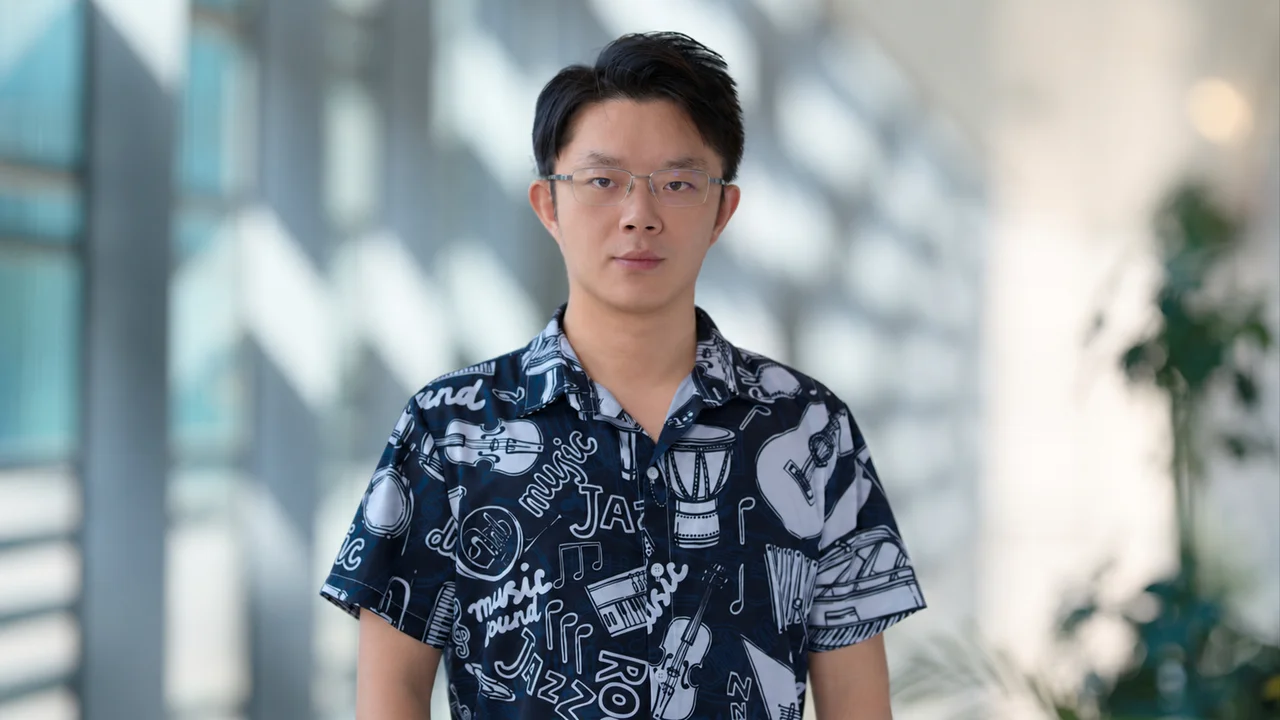
Jian Shi is a Ph.D. candidate in Computer Science at King Abdullah University of Science and Technology (KAUST), where he conducts research under the supervision of Prof. Peter Wonka. Before joining KAUST, Shi earned an M.Sc. in Cloud Computing with Distinction (First-Class Honours) from University of Leicester and a bachelor's degree in Information Management and Information Systems from Zhengzhou University of Aeronautics. His professional experience includes research positions at NEC Laboratories China, The Chinese University of Hong Kong, and GE Power, where he worked on a broad range of machine learning and computer vision applications.

Shi has established a strong publication record in leading journals and conferences in artificial intelligence and computer vision. His work has appeared in premier venues including ACM SIGGRAPH, ICML, CVPR, ICCV, ECCV, IEEE TPAMI, and ICRA. His recent research contributions include advances in stereo video generation, depth estimation, anomaly detection, human keypoint estimation from LiDAR data, and the integration of geometric reasoning into generative AI systems.

In addition to his academic research, Shi is a co-founder and core maintainer of Kornia, one of the world's most widely used open-source differentiable computer vision libraries built on PyTorch. He has also served as a mentor and organization administrator for Google Summer of Code, helping foster open-source innovation in computer vision and machine learning.

Among his notable achievements, Shi received the KAUST Dean's List Award in 2025 in recognition of his academic excellence and research accomplishments. He is also an inventor on multiple patent filings and has delivered invited talks on emerging topics such as agentic computer vision and open-source AI infrastructure. Through both his scholarly contributions and open-source leadership, Shi continues to advance the development of next-generation vision systems that enable machines to perceive, understand, and synthesize the three-dimensional world.

Expertise and Interests

Shi's recent work explores the intersection of geometry and generative AI. His research investigates stereo video synthesis, disparity learning, diffusion models, multi-view reconstruction, and high-fidelity 3D scene understanding. By incorporating geometric constraints into learning-based systems, he seeks to improve robustness, realism, and spatial consistency in next-generation AI vision models.

Education
Master of Science (M.S.)
Cloud Computing, University of Leicester (UoL), United Kingdom, 2018
Bachelor of Management (B.Mgmt.)
Information Management and Information Systems, Zhengzhou University of Aeronautics (ZUA), China, 2015
Biography

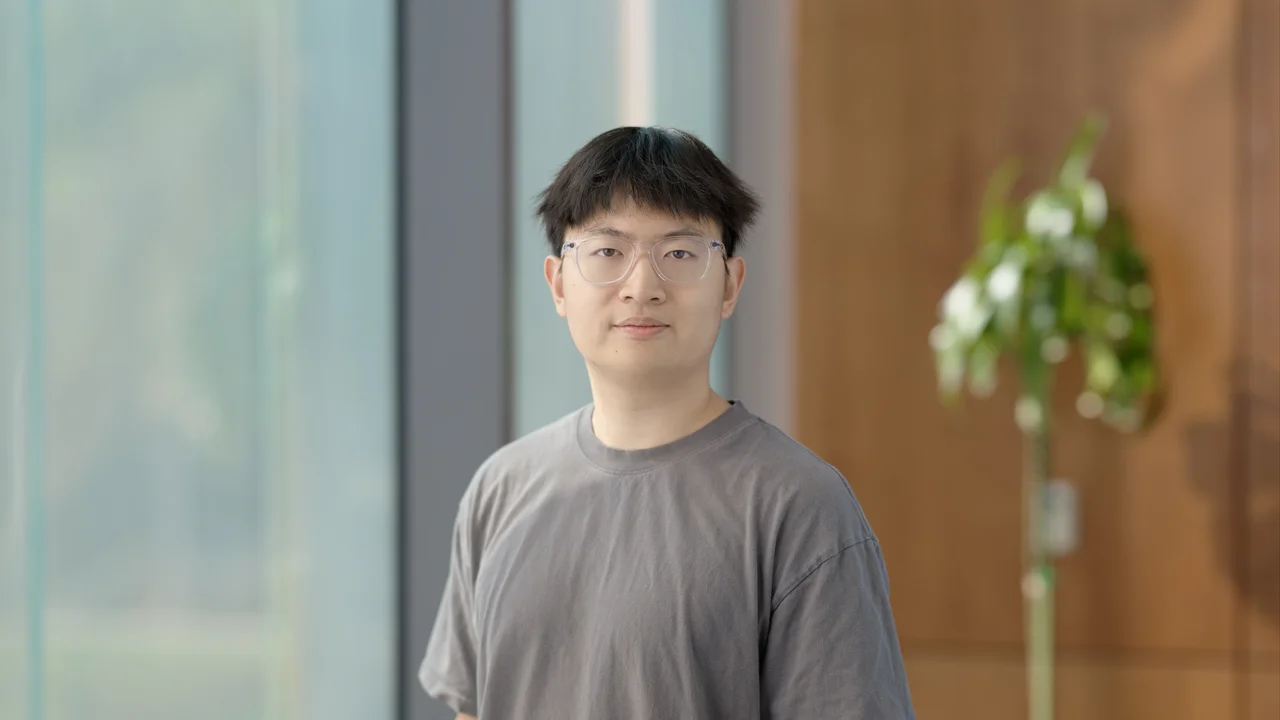
Zhenyu Li is a Ph.D. candidate in Computer Science at King Abdullah University of Science and Technology (KAUST), where he conducts research under the supervision of Prof. Peter Wonka. Before joining KAUST, he earned his bachelor’s and master’s degrees in Computer Science from Harbin Institute of Technology, China. His research focuses on depth estimation, 3D reconstruction, and geometric scene understanding, with broader interests in generative models and embodied perception. He has gained industrial research experience at Meta Reality Labs, ByteDance Seed, DiDi Cargo, and SenseTime, working on applications spanning AR/VR body tracking, 3D foundation models, and autonomous driving.

Li’s research advances the recovery of detailed and coherent three-dimensional geometry from visual observations. His contributions include BinsFormer for monocular depth estimation, PatchFusion and the PatchRefiner series for high-resolution depth prediction, and Amodal Depth Anything for estimating geometry beyond visible object surfaces. His publications have appeared in leading venues including CVPR, ICCV, ECCV, ICLR, ICML, SIGGRAPH, and SIGGRAPH Asia. During his internship at Meta Reality Labs, he developed EgoPoseFormer V2 for accurate and efficient egocentric human motion estimation, which was selected as a CVPR 2026 Highlight. At ByteDance Seed, he contributed to Depth Anything 3, an ICLR 2026 Oral paper.

Li received the KAUST CEMSE Dean’s List Award in 2024 and the China National Scholarship in 2022. His competition achievements include first place in the ICCV 2023 Visual Continual Learning Challenge’s Multitask Learning for Robustness Track and second place in the ECCV 2022 Mobile AI & AIM Monocular Depth Estimation Challenge. His broader research goal is to develop visual systems that can recover, understand, and reason about the three-dimensional world.

Expertise and Interests

Li's research aims to build intelligent systems capable of perceiving, reconstructing and reasoning about the three-dimensional world from visual observations. His work combines geometric modeling with modern deep learning approaches, spanning depth estimation, 3D scene reconstruction, visual generative modeling, embodied perception and multimodal reasoning. He is particularly interested in developing next-generation foundation models that unify visual perception and language-driven reasoning for applications in robotics, mixed reality and spatial AI.

Education
Master of Science (M.S.)
Computer Science, Harbin Institute of Technology (HIT), China, 2023
Bachelor of Science (B.S.)
Computer Science, Harbin Institute of Technology (HIT), China, 2021

Alumni

Former Members

Consultants